
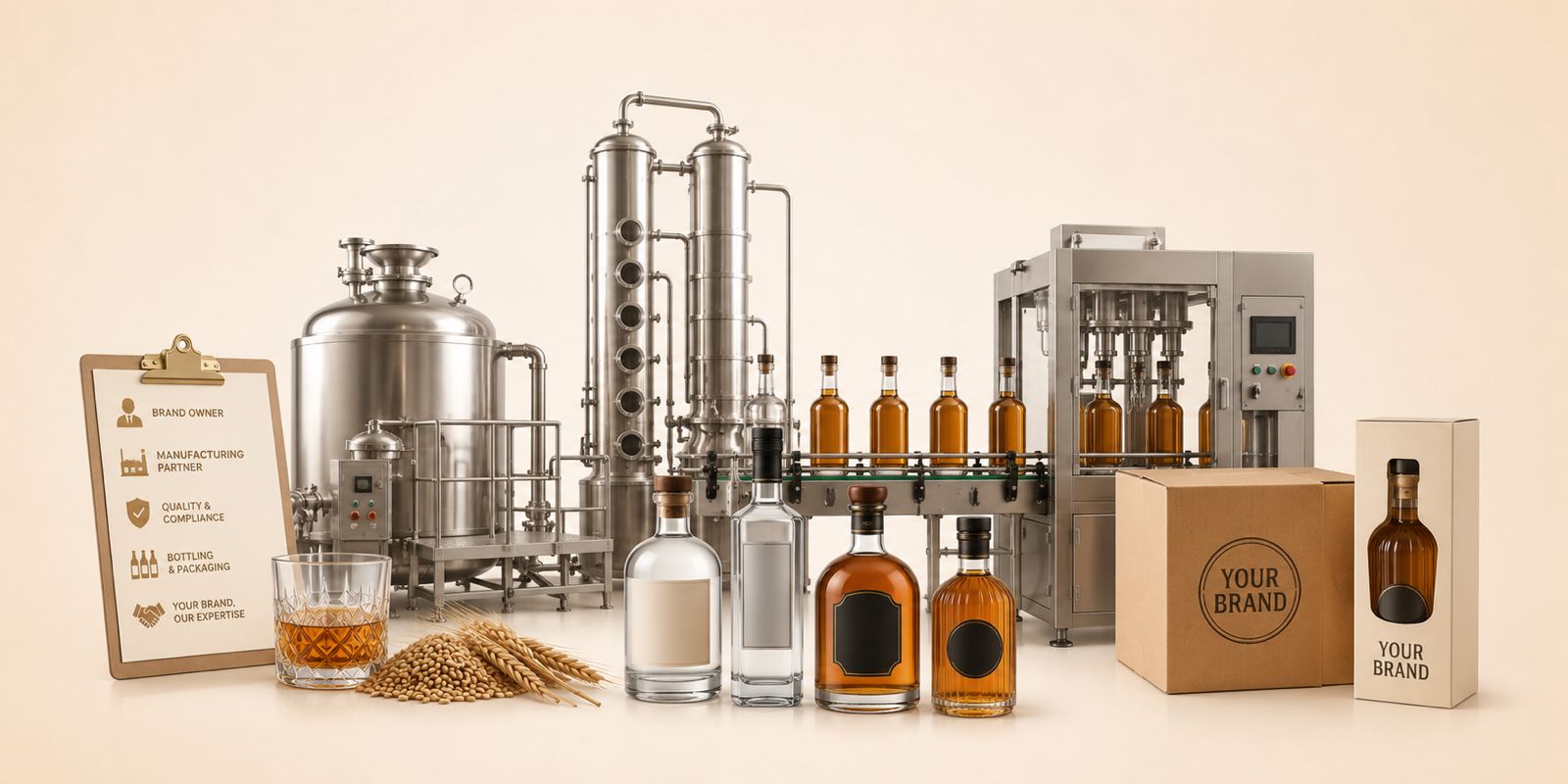
Contract manufacturing in the liquor industry means a brand owner or principal company hires an existing licensed distillery or bottling facility to produce its product on their behalf. The brand owner retains ownership of the recipe, formulation, and label; the contract manufacturer provides production infrastructure, licensed capacity, raw materials (or processes those supplied), and sometimes distribution services within the state.
Why Contract Manufacturing Exists in Indian Spirits
India’s alcohol industry operates under a state-specific licensing regime. Alcohol regulation is a state subject under the Constitution, which means every state sets its own excise rules, duty structures, and distribution policies. A brand cannot simply bottle in one state and ship freely to another; each state requires licensed production or approved import arrangements.
This regulatory architecture makes it economically impractical for many brands to build and license their own distillery in every state they want to sell in. Contract manufacturing solves that problem by allowing a brand to partner with already-licensed local distilleries, use their production capacity, and reach consumers in that state market through an established regulatory framework.
How a Contract Manufacturing Agreement Works
A typical contract manufacturing arrangement in the Indian liquor industry involves several defined components:
- Brand licensing: The principal (brand owner) grants the manufacturer the right to produce a specific product under its brand name and formulation. This covers recipes, blending ratios, approved raw materials, and packaging specifications.
- Raw material supply: Depending on the agreement structure, the brand owner may supply certain key inputs (such as Scotch malt whisky concentrate) while the manufacturer provides base ENA, water, packaging materials, and production.
- Quality oversight: The brand owner typically retains the right to inspect production, conduct batch testing, and reject non-conforming goods. Leading facilities like AABL operate documented quality systems that align with these requirements.
- Excise compliance: The contract manufacturer holds the relevant state excise licence and manages all compliance obligations, duty payment, label registration, statutory records, and inspection within that jurisdiction.
- Revenue model: Fees are typically structured as a cost-per-case rate covering production, materials, overheads, and margin. The brand owner manages pricing, marketing, and distribution within agreed terms.
Tolling vs. Full Contract Manufacturing: What’s the Difference?
These two terms are sometimes used interchangeably in the industry, but they refer to distinct arrangements:
Tolling (Job Work)
The brand owner supplies the key raw materials and pays the distillery a processing fee. The distillery provides equipment, labour, and infrastructure but does not own or purchase the inputs. This model is common for premium IMFL where proprietary ingredients like aged malt concentrate are controlled by the brand owner.
Full Contract Manufacturing
The manufacturer sources all raw materials, produces to a given specification, and charges a fully inclusive per-case cost. The brand owner specifies the product but does not supply inputs. This is more common for standard IMFL categories where the raw material is commodity ENA.
Most large Indian distilleries operating as contract manufacturers, including AABL, are structured to handle both models depending on the client’s requirements and the product category.
Why Brands Choose Contract Manufacturing Over Building Their Own Facility
Establishing a greenfield distillery in India requires environmental clearances, a state excise licence, significant capital expenditure, and a multi-year timeline before the first bottle rolls off the line. Contract manufacturing allows brands to:
- Enter a state market within months rather than years.
- Avoid capital lock-in in fixed production assets.
- Scale production up or down in line with market demand.
- Leverage the contract manufacturer’s existing compliance infrastructure.
- Test new markets or products before making large capital commitments.
For international spirits companies entering India, such as Diageo’s arrangement with AABL, this model also allows production to be localised under Indian excise rules while maintaining full control over product formulation and brand positioning.
What Makes a Good Contract Manufacturing Partner?
Not all distilleries capable of producing IMFL at volume are suitable contract manufacturing partners. The key criteria that serious brand owners evaluate include:
- Production scale and capacity availability: Can the facility absorb the required volume without compromising existing commitments?
- ENA quality: The base spirit determines the product ceiling. Facilities with in-house ENA production at verified purity levels (like AABL’s 45 MLPA ENA capacity) eliminate a significant quality variable.
- Regulatory standing: Valid excise licences, clean compliance history, and experience managing statutory records across state-specific formats.
- Quality systems: Documented batch records, laboratory testing capability, and a functioning sensory panel.
- Flexibility: Multi-category capability across whisky, vodka, rum, gin, and brandy, with the ability to handle both glass and PET packaging at varying bottle sizes.
- Track record: References from existing brand partners and a history of meeting production schedules.
AABL’s contract manufacturing credentials are demonstrated through its active production relationships with Diageo and Inbrew Beverages, its ENA supply agreements with Diageo-Radico and Mason & Summers, and a 32-line bottling infrastructure certified for major brand production.
Common Questions from Brands Exploring Contract Manufacturing
Is Contract Manufacturing Legal Across All Indian States?
Yes, subject to state-specific excise rules. The contract manufacturer holds the licence; the brand registers its label with the relevant state excise authority. The process is well-established across India’s major consuming states including Maharashtra, Uttar Pradesh, Madhya Pradesh, Kerala, and Karnataka.
How Does Quality Control Work When Production Is Outsourced?
Robust agreements include rights of inspection, batch approval protocols, and independent laboratory testing. Brand owners typically send their own quality representatives for initial production runs and at regular intervals thereafter. At an integrated facility like AABL, in-house quality labs and documented processes reduce the reliance on external auditing.
Can a Brand Switch Contract Manufacturers Easily?
Label registration and excise approvals are tied to the production facility in most states. Switching manufacturers requires re-registration, which takes time and involves regulatory processes. This makes initial partner selection critical.